

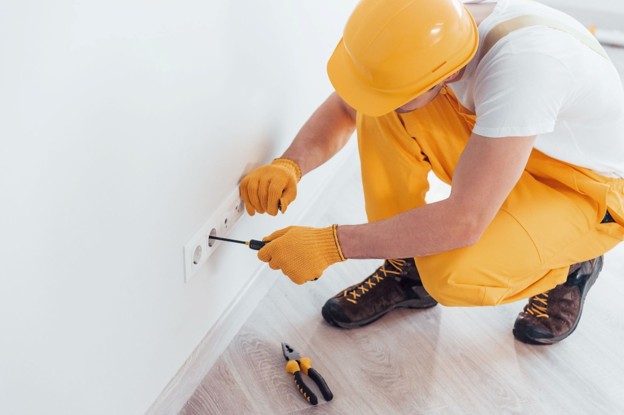
It’s a familiar temptation for landlords: a small issue crops up, and it feels easier to leave it for now rather than arrange a repair straight away. Research into the true cost of buy-to-let ownership suggests this instinct, understandable as it is, tends to be an expensive one.

The Scale Of Lifetime Repair Costs
Industry research from Alan Boswell Group and Compare My Move found that landlords carry out repair or maintenance work an average of 72 times over the course of owning a single buy-to-let property, with total costs sometimes exceeding £34,000. The two most expensive individual repairs illustrate just how much scale matters here. Underpinning, needed when a property’s foundations weaken, typically due to subsidence, can cost upwards of £25,000, while a full roof replacement can run to £10,500.
These figures matter not because every landlord will face a bill of this size, but because they show what happens when a property is allowed to deteriorate to the point where structural intervention becomes necessary. Subsidence rarely appears overnight. It develops gradually, often alongside smaller warning signs such as hairline cracks or sticking doors, that a regular inspection would catch long before the problem escalates into a five-figure repair.
The same pattern holds for less dramatic issues too. A dripping tap left unfixed wastes water and, over time, can damage the surrounding surface it drips onto. A slow leak behind a wall or under a floor can go unnoticed for months while it quietly causes rot or mould growth, by which point the repair involves not just the original plumbing fault but the fabric of the property around it. In almost every case, the cost of the eventual fix is disproportionate to how cheaply and easily the problem could have been resolved at the point it first appeared.
What Proactive Maintenance Actually Prevents
The logic of preventative maintenance is straightforward: a loose roof tile costs a fraction to replace compared with the water damage, insulation loss and eventual structural repair that follow if it’s left unaddressed through a winter. A small damp patch, treated early, is a minor job. Left to develop, it can spread into the property’s timber and plasterwork, turning a same-day fix into weeks of remedial work and a displaced tenant.
This is increasingly relevant given the direction of legislative expectation around damp and mould. Under the Renters’ Rights Act 2025, the government has been given the power to extend Awaab’s Law timescales for damp and mould to the private rented sector, though no start date for this extension has yet been confirmed, meaning proactive maintenance remains a sensible precaution rather than a current legal requirement for private landlords. Landlords who already treat prompt repairs as standard practice, rather than waiting for a legal deadline to force their hand, are better positioned regardless of when that timescale eventually applies to them.
Beyond the direct cost savings, prompt repairs have a clear relationship with tenant retention. A tenant whose maintenance requests are addressed quickly is more likely to view the property, and the landlord or agent managing it, favourably, and more likely to stay for longer as a result. Given that a single tenant turnover brings its own costs, in void periods, re-letting fees, and the administrative burden of finding and referencing a new tenant, the retention benefit of good maintenance compounds the direct financial saving.
Why DIY Often Costs More In The End
Faced with rising costs, it’s understandable that many landlords consider handling repairs themselves rather than calling in a professional. Research from Towergate Direct found that 53% of UK landlords have attempted to fix property damage themselves. The results, however, are sobering. 43% of those landlords regretted the decision, citing poor results, further damage caused, or complaints from tenants. Perhaps most tellingly, 46% ended up paying a professional to redo the work afterwards, at a higher total cost than if they had commissioned the job properly the first time around.
This pattern reflects a common trap in property management: the apparent saving from doing a job yourself often doesn’t account for the risk of getting it wrong, particularly for anything involving plumbing, electrics, or structural work where a mistake can create a second, more expensive problem on top of the original one. A landlord’s time also has a cost, even when it doesn’t appear on an invoice, and hours spent on a repair that a qualified tradesperson could complete faster and to a higher standard is rarely the most efficient use of that time.
There’s also a compliance dimension worth flagging. Certain categories of repair, gas appliances and electrical installations in particular, carry legal requirements around who is permitted to carry out the work at all. A DIY repair to a gas fitting or a fuse board isn’t simply inadvisable, it can be unlawful, and any resulting issue could invalidate landlord insurance cover or create liability that goes well beyond the cost of the repair itself. For anything falling into this category, professional attention isn’t a preference, it’s a requirement.
Building A System, Not Just Reacting To Problems
The landlords who avoid the largest repair bills tend to share a common approach: they treat maintenance as an ongoing system rather than a series of one-off reactions. Regular inspections catch small issues while they’re still small. Established relationships with trusted, vetted contractors mean repairs happen quickly and to a consistent standard, without the landlord needing to research and vet a tradesperson from scratch every time something goes wrong.
This is difficult to replicate for a landlord managing a single buy-to-let property alongside a full-time job, and becomes progressively harder as a portfolio grows. It is, however, exactly the kind of system a dedicated property management team is built to run, and the £34,000 lifetime repair figure is a useful reminder of just how much is at stake in getting it right.
Slater & Brandley’s in-house maintenance team handles 98% of all repairs directly, meaning issues are caught early and resolved quickly, before they become costly. Contact our team to discuss how our maintenance model protects your investment.

Image Source: Envato
Leave A Comment